


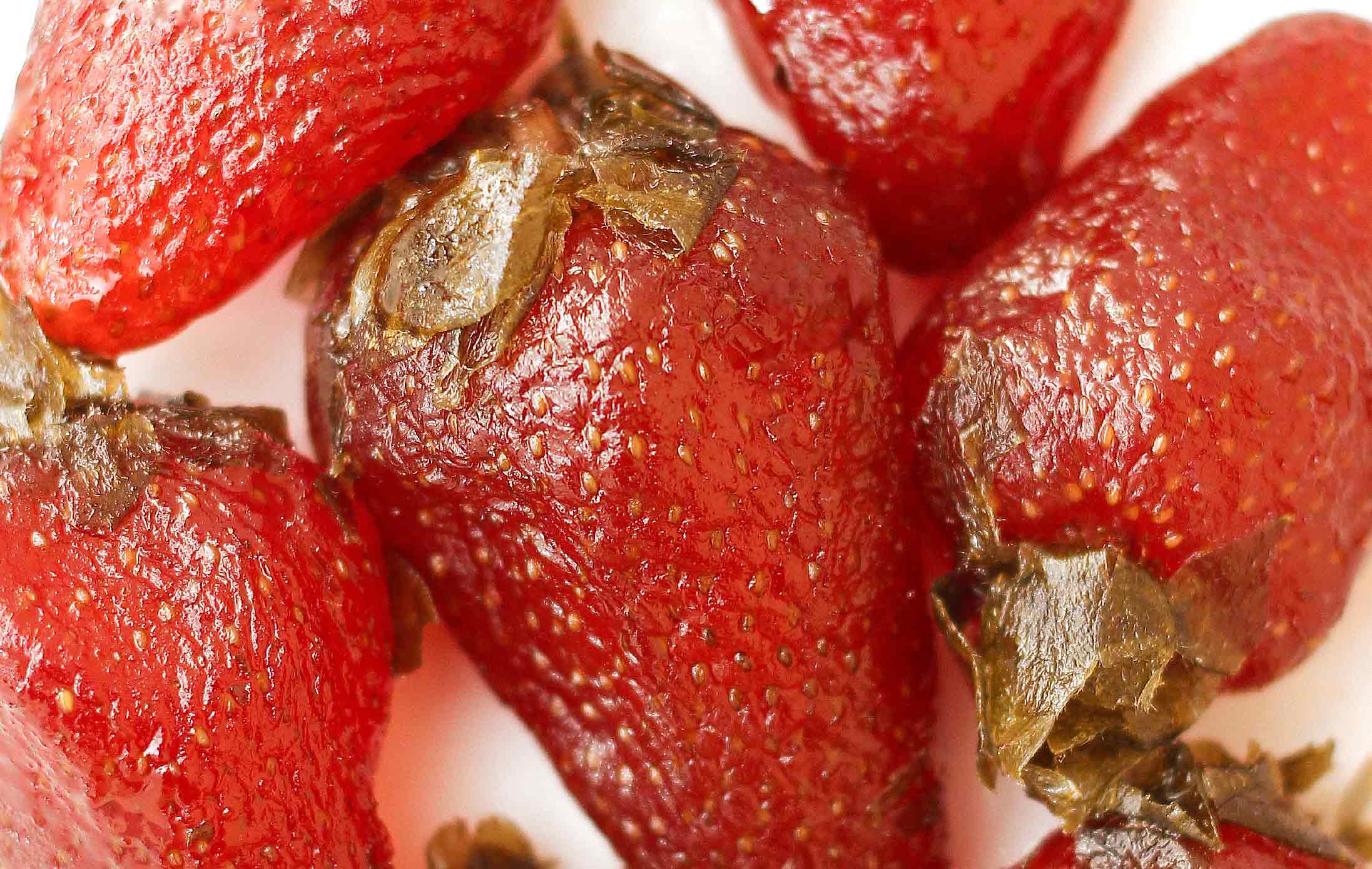
A labour of patience: five weeks to transform a piece of fruit into a candied treasure
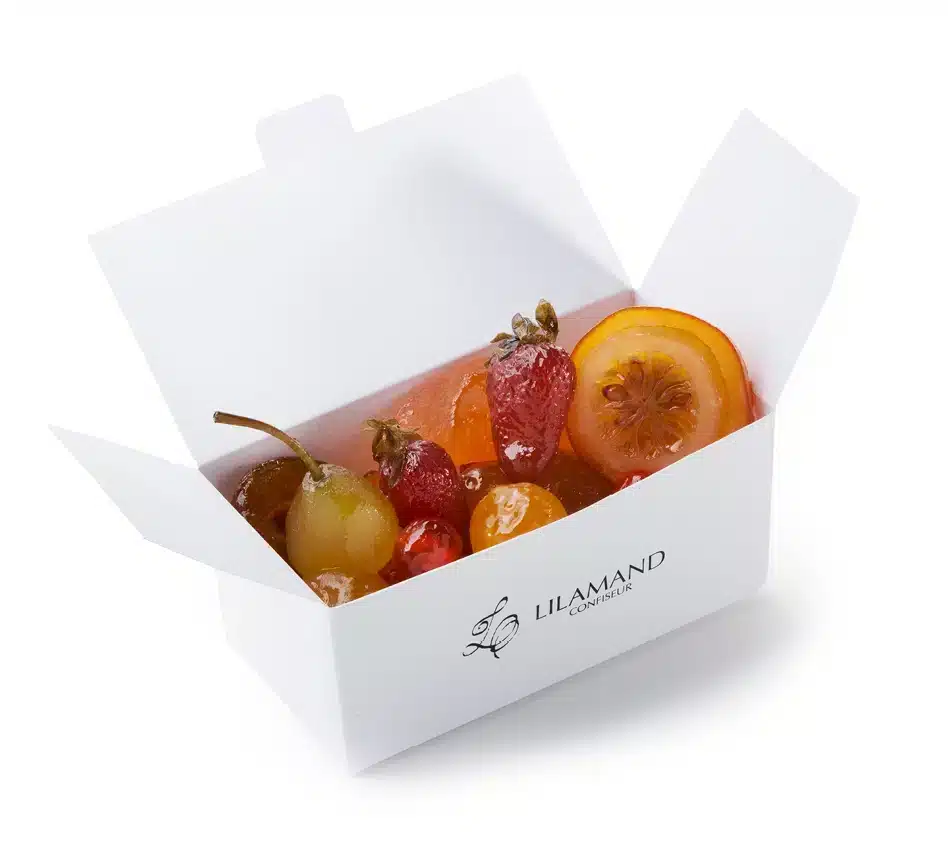
A technical process replaces the fruit’s natural juices with a sugar syrup. This is known as candying. Through successive soaking over a period of 3 to 4 weeks, an osmotic exchange takes place between the fruit flesh and this delicious nectar. The fruit is then left to rest in a fruit bin for at least two months to perfect the ‘candying’ process. The final finishing touch is the glazing, which gives it a glossy appearance and, to the touch, the sensation of a fruit that has just been picked.
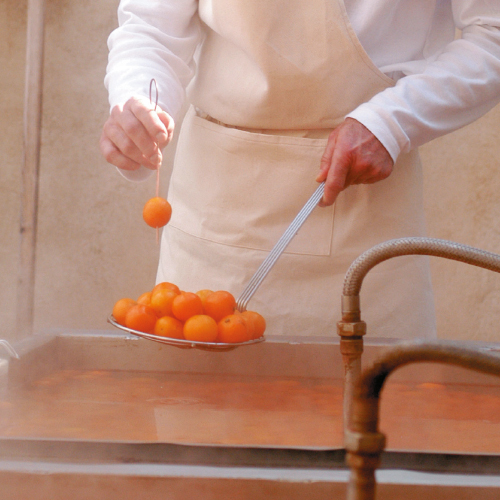
1. Blanching
Each fruit is blanched. Placed in a bowl of clear water, it undergoes an initial boiling to soften its flesh and loosen its fibres. This first, very delicate step is crucial. The heating time depends entirely on the confectioner’s judgement. Once sufficiently softened, the fruit is rinsed in clear water before being “placed in syrup”.
2. Preserving
Over a period of 3 to 4 weeks, an osmotic process takes place between the fruit flesh and this delicious nectar. In copper basins, the fruit begins to be preserved over the course of 7 to 8 boilings. It is then left to rest in a fruit bin for at least 2 months to complete the preserving process.
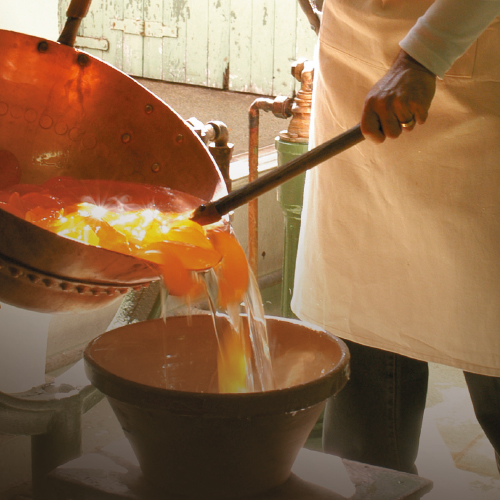
3. Drained
It is only upon receipt of an order that the fruit is separated from the syrup in which it was soaking. Trapped in its wicker basket, it can either be packed as it is—sticky and glossy—to meet the requirements of pastry “workshops”, or undergo a final soak.
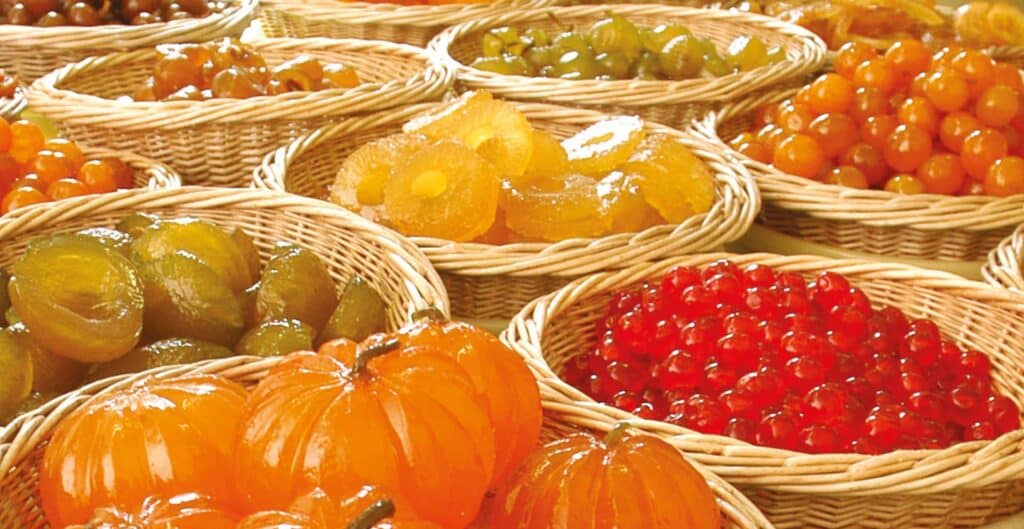
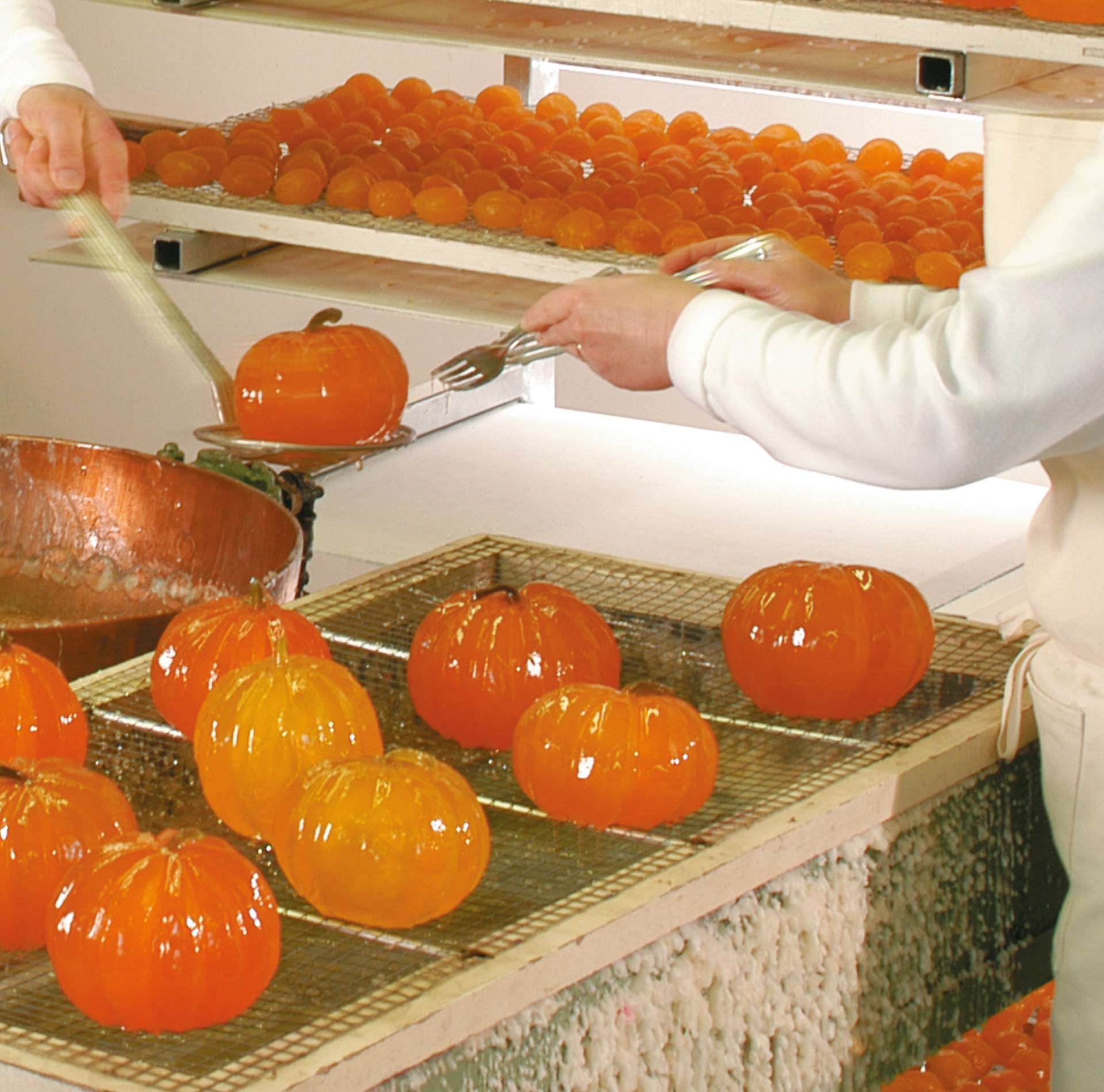
4. Glazed
To coat the fruit in a layer of sugar that will protect it and reduce that sticky sensation, it is given a final dip in a pure, concentrated sugar syrup. It is this meticulousness and dedication that truly reflect our commitment to the highest quality. Placed on a rack, it will dry overnight before being packaged.
Buy our syrups

Buy our spreads